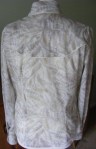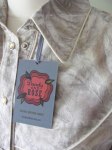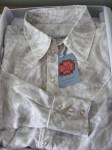
Dandy & Rose

Bespoke Western Shirts, Handmade in England


Leave a comment

What my mamma made for me

It’s Mother’s Day, so I think I’ll get the sewing machine out.
That’s what women in my family do. Good times! Celebrate: get the sewing machine out. Bad times… patch up the wounds with some fancy clothes: get the sewing machine out. It may not be the most enlightened style of motherhood, but it’s what we’ve got.
My Grandmother, Beatrice Stainer, was the first in living memory of a line of sewing mothers. She was apprenticed as a tailor in her native Dorchester, where she met Private Tom Aspley, a regular soldier in the Army who was stationed at Dorchester Barracks. When he was demobbed in 1921, they moved to the Midlands where he found work as a miner in the Warwickshire village of Arley.
I have no idea why a man who crawls uphill under the ground to hew out coal for a living should have a meagre income, but apparently he did, because to supplement it, Beattie started taking in sewing.
The other miners’ wives would bring their husbands’ old trousers and Beattie would cut away the worn knees and frayed hems and make a good-as-new pair of children’s trousers. For this act of transformation, she charged 6d.
Beattie was a sensitive soul. She had signed the pledge in 1911, at the age of twelve, and she never touched a drop of drink, not even a port and lemon at Christmas. She attended church all her life, never swore, admonished those who did and, although she read the News of The World every week, she very much disapproved of it. The Sundays when she visited were punctuated by her shocked, but gleeful, tut-tuts.
There was an air of gentle rusticity about her; the West Country burr never left her voice. I used to ask for re-runs of her account of having once seen Thomas Hardy, wearing plus fours and pushing his bike, up the High Street of her home town.
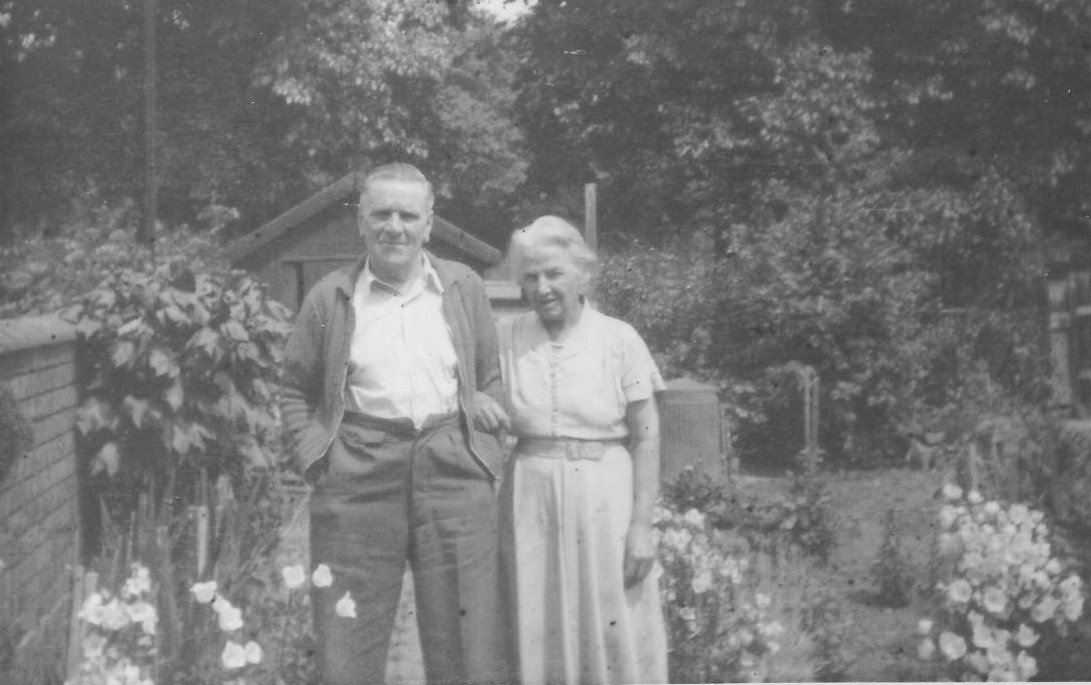
beattie and tom

Beattie and Tom in the garden of their house, 25 Duke Street, Nuneaton

Though she followed her sweetheart there, she wasn’t comfortable with the more abrasive ways of the Warwickshire coal village, where the women would shout to one another across the ‘backs’ of their terraced homes. They sometimes said bad words, and perhaps worse, their sheets were not always gleaming white. They were ‘ditchy’. Then Beattie lost a child in his early weeks and blamed herself. ‘That were reaching up to fetch things off a shelf,’ she used to tell me. ‘Cord round his neck’. It used to break my heart to hear her say that, even as a kid.
Anyway, Beattie got so low that, even in the unenlightened 1930s, they could see she needed treatment. Goodness knows what they did to her in the hospital but while she was gone, Tom sent my dad, a little boy of 10 or so, around the village to ask people to pick up their worn out trousers; Beattie had a big pile waiting to be made into shorts with pointed tabs like these.
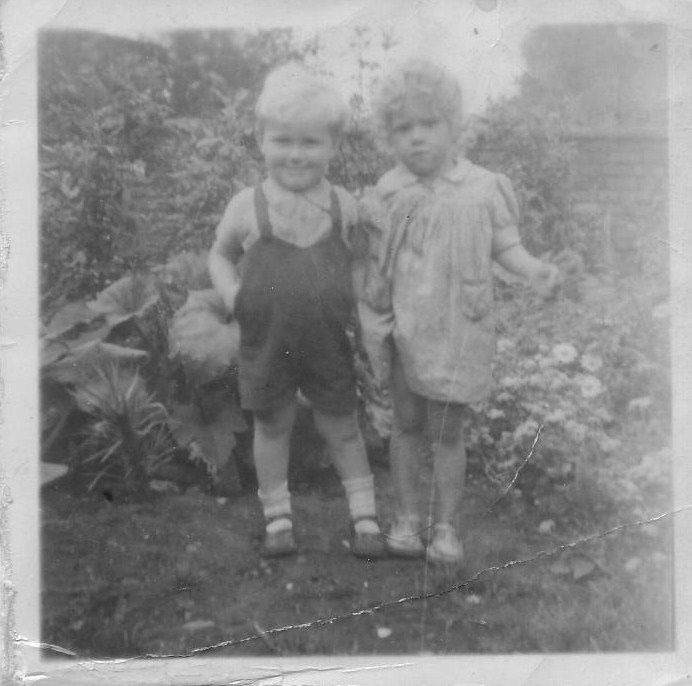
Brother Paul and neighbour in Grandma Beattie's house, 1948

Brother Paul and neighbour in Grandma Beattie’s garden, 1948

If she’d got them all done when she meant to, the family might have had, oooh… an extra 5 shillings to spend. Eventually.
According to my dad’s story, some of the women said it would ‘do when she came out of hospital’. Tom was really angry and sent his boy back to say that if they didn’t come and pick up the work that had been too much for Beattie, he would ‘put it at the back of the fire’.
And that’s how I came to be taught that sewing skills weren’t worth much. People didn’t understand how long they took to acquire or how hard it was to construct a garment. They expected to pay a pittance for a skill that was worth gold.

But that’s not how you judge the worth of skills with scissors, needle and thread. I see that now.

Later on, when my Dad married my Mum, Iris, in 1944, together she and Beattie cut up Iris’ wedding dress and made it into satin blouses for my brothers and yes, the pointed-tab trouser pattern came out again.

But in the 1960s, when I was growing up, times were not so hard. My Mum bought a state-of-the art Singer sewing machine that did linear embroidery. The cream cotton dress she made with tiered sleeves, a different stitch finishing each tier, influences my sense of what’s beautiful to this day.  Throughout my childhood, she made every wedding and bridesmaid dress in the family – and being the family baby, I got to wear a lot of bridesmaid’s dresses. But my favourite were the ballroom dancing dresses she made for me and my friend. I remember my brother Paul patiently sticking a rhinestone in the centre of every flower motif on these:
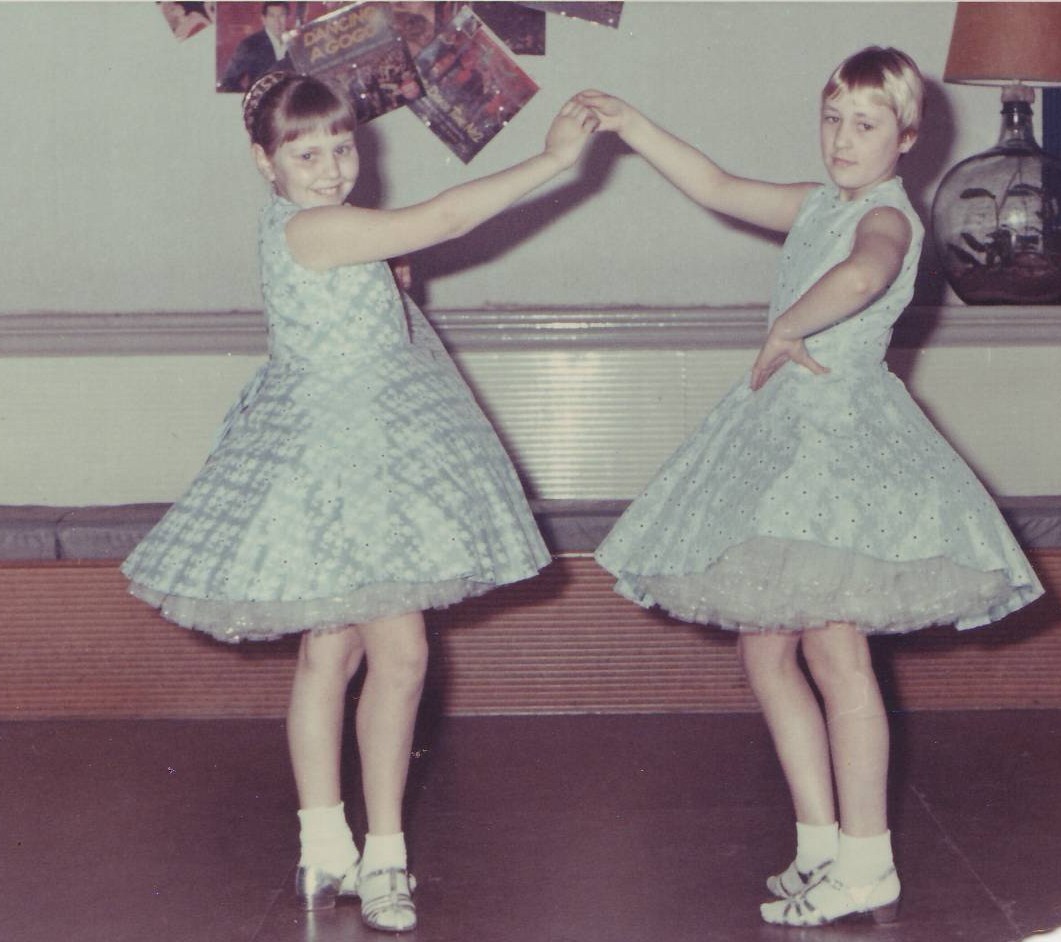
dance dresses

By the time I became a Mum, it was more expensive to sew than to buy clothes, but I still made my kids countless dressing up costumes, school dresses, trousers and even pyjamas. Even though they are teenagers now, I will still sew for them as soon as I have even the merest hint of permission.
It’s like Dolly says in her song ‘Coat of Many Colours’. It’s one of my favourites, and never fails to move me. It’s the story of how, like Beattie, Mrs Parton made her child something new from something old; and how, despite the derision of her schoolmates, Dolly valued the garment, knowing there was ‘love in every stitch.’ It was…. ‘The coat of many colours that my mamma made for me… made just for me.’

Hear Dolly – and shed a little tear, probably! :


Leave a comment

What people really wore in the 80s. Well, some people.

According to the anthropologist Igor Kopytoff, we can learn a lot about culture by studying the lives of objects. How they change hands, and what we swap for them; the emotional, sometimes magical values that we place on them; the uses we put them to – all these things tell us a lot about the societies where the things we make and own live. As all good students of Design History know, Kopytoff calls this the ‘cultural biography’ of objects.
Igor Kopytoff: it always strikes me as the sort of name that a bloke with a very big brain might have. And I have always reserved my contemplations of Kopytoff’s theory for the big brain activities, like essay writing. It never really occurred to me that that there might be an object with a ‘cultural biography’ in my loft.
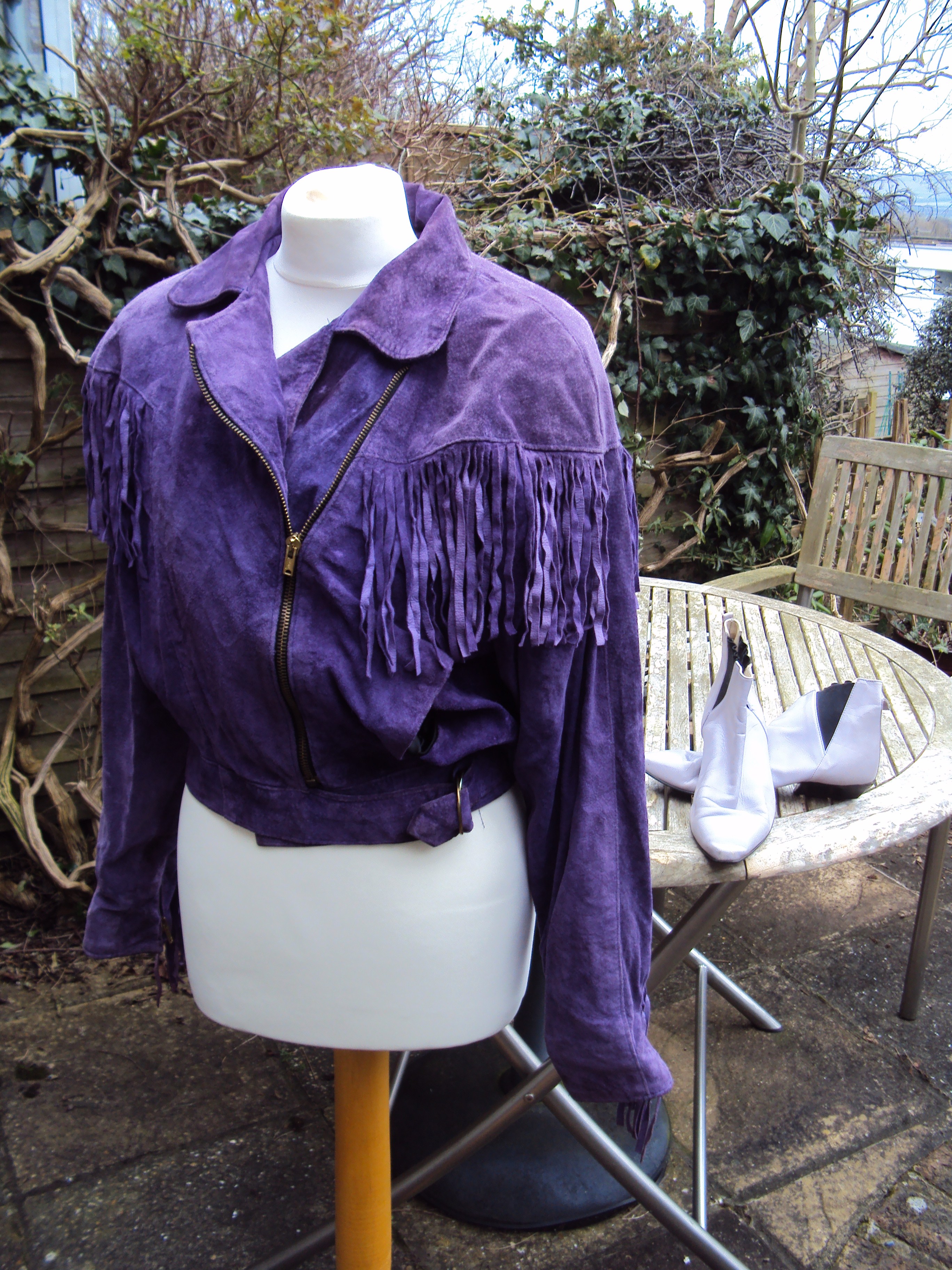
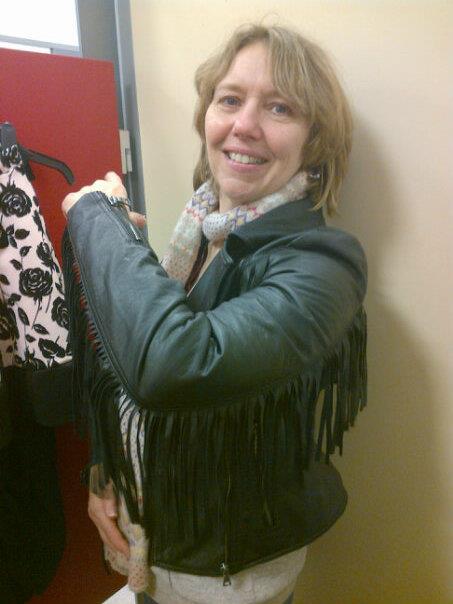
That’s where, after a bit of a search earlier today, I found my purple suede fringed jacket.
tkmax

Yesterday, out shopping with my daughter in Nuneaton TKMaxx – an activity low in cultural capital if ever there was one – I tried on a fake leather fringed jacket. I would have bought it, if not for the overwhelming smell of vinyl it exuded.

But it did remind me that I owned a fringed jacket already – this purple suede number which I think I acquired in 1989.

frontsuede (2)

Professor Kopytoff would be interested to note that, as an item of western wear, it’s entirely fake. It came from one of those discount leather shops you used to see at the tacky end of Oxford Street and the label, to my surprise, says ‘Handmade in England’.
As soon as I saw it, I knew I had to have it: at the time, all shades of purple were a signature colour for me. I had read the 80s fashion self-help classic ‘Colour Me Beautiful’ and identified myself as a ‘summer’ – since when, I had acquired a wardrobe almost entirely made up of lilac, magenta, lavender, violet… you name the shade of purple, I wore it. All my jewellery was amethyst. Occasionally I broke the monotony with a splash of those other 80s favourites, fuschia or electric blue, but I mostly stuck to purple. The lilac chelsea boots in the photo, bought in a sale at the Covent Garden branch of Hobbs, were a particularly prized possession. I found them in the loft too and they still fit.

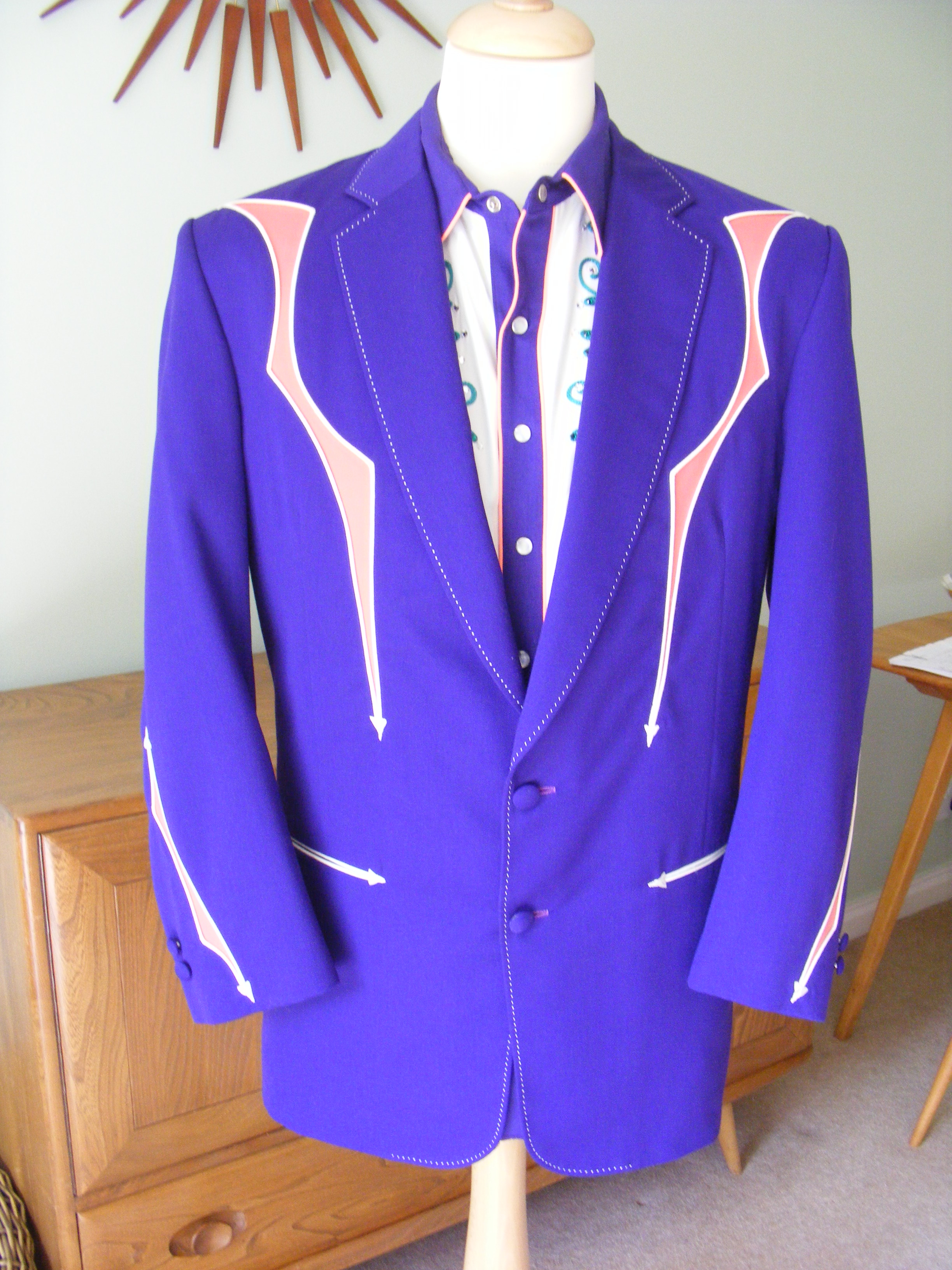
I wore this combo to lots of gigs. This was the era when cool country singers nailed their traditionalist colours to the mast by wearing jackets by the great hillbilly tailor, Manuel. Manuel liked purple too – look at this jacket and shirt he made for Jim Lauderdale, who still wears his clothes onstage today. And if Jim, and Dwight Yoakam and Marty Stuart thought western wear was cool, that was good enough for me.

budbud (2)

The older generation of British country fans didn’t agree. They thought that dressing western gave country music a bad name and was responsible for its reputation for naffness. And I do remember seeing, at my first ever Tammy Wynette gig in 1987, a middle aged lady dressed as a squaw. So I completely understand why the then-editor of Country Music People magazine greeted me, as I arrived in this jacket, at the Royal Albert Hall to cover a 1990 gig for him, with the immortal words, ‘What the f*** are you wearing?’

You see what I’m getting at here, Kopytoff-style? Just as a Manuel jacket was a signifier of authenticity for my favourite artists, this purple suede jacket had a meaning for me. It showed the kind of country fan I was: my discovery of country music might have been fresh, but I liked my country to sound old. And even now that I’ve read all that I have about country music history and I understand about different types of authenticity and even acknowledge that a softer style of country was the way the music started, still in my heart I know that, when I hear the searing fiddle and wailing steel guitar of a great honky tonk band – well, that’s the real thing.

Even so, the next statement that this jacket, with its huge shoulder pads, brash colour and unforgiving nipped-in waist, might have made could well have been one about the cruel whims of fashion. It could so easily have gone, long ago, to a charity shop, had it not become a piece of personal memorabilia for me. I think it must have been in 1991 that I wore it to interview the Queen of Country Music Authenticity, Emmylou Harris, in London. It’s the only time I’ve ever met her and she was so bright, so interesting and so gracious that I’ll never forget it. And as I came into the room she complimented me on my jacket. To be fair, I had teamed it that day with a fuschia skirt, so maybe she just felt she had to say something; I mean, she could hardly pretend she hadn’t noticed my outfit, could she?

The jacket’s fate was sealed: I was never going to be able to part with it, ever, after Emmylou had said she liked it. That’s how it came to spend twenty years in a loft – and to survive into a world where your mum’s old clothes are no longer laughably unfashionable, the subject of ridicule. They are vintage. I wonder how much longer I’ll be allowed to own it?

And one more thing: after I had accepted Emmylou’s compliment, she gave me a piece of fashion advice. She told me only ever to wear one piece of western wear at a time – so the boots, the jacket or the shirt, but not all or even any two of them at once.

Now. I have the greatest respect for Emmylou and I knew, even then, what a privilege it is to receive fashion tips from her. I nodded and agreed.

Then I took absolutely no notice. Put it all on, I say! Fringes, piping, rhinestones, pointed toes and Cuban heels. Kick ‘em up, cowgirl – however real or fake they, or you, are!


2 Comments

Dale Watson: Ruffles, Rhinestones and a Honky-Tonk Hero

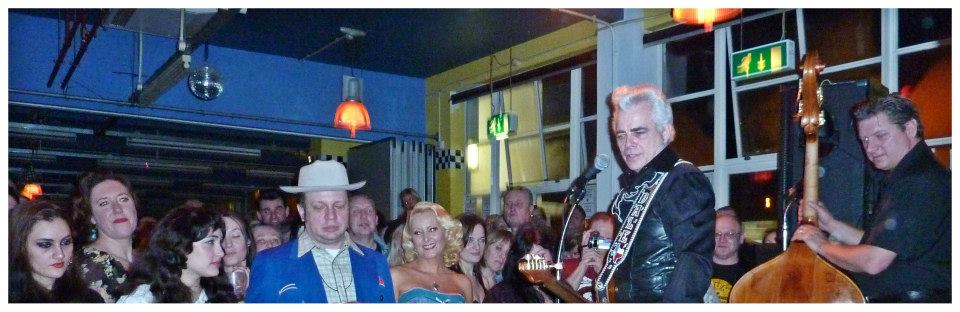
i'm in this one

When it comes to transcribing interviews, I’m a terrible procrastinator.

So it wasn’t until Spring 2011 that I sat down to relive the interview I’d done with the great Texan honky-tonker Dale Watson the previous September for my MA dissertation about ‘Male Dress and The Performance of Country Music’. A gift of a subject if ever there was one!

This time, I laughed all through the transcription. Although I’ve interviewed lots of musicians about their work over the years, I was slightly daunted when it came to asking them about their clothes. After all, a lot of guys, in whatever profession, prefer to give the impression they don’t pay much attention to what they wear.

But in Dale’s case, I needn’t have worried – a passing enquiry about where he had bought the patent leather boots I’d often noticed him wear onstage resulted in a hilarious story, told with faultless comic timing, involving an ‘overwhelming feeling’ of longing for a pair of patent, pointed-toe boots and a visit to an ancient Australian shoemaker, who happened to have a pair in exactly the right size that had been commissioned in the 1960s by a customer who never collected them . It’s the only tale of fate and destiny involving patent leather Beatle boots I have ever heard, and I was thoroughly entertained by it. As well as being a lot of fun, the interview was full of insights – there were a few priceless quotes in there that I’ve used in everything I’ve written on the subject since.

Now, I thought myself pretty cool to be sitting aboard Dale Watson’s tour bus in the car park of The Mercy Lounge, Nashville, asking him questions about his clothes, but another level of self-satisfaction was added when I discovered that this was a vintage bus that had once belonged to Ray Price. To prove it, there was a mirror right behind Dale’s head, etched with a camp fire scene that illustrated ol’ Ray’s band’s name, ‘The Cherokee Cowboys’.

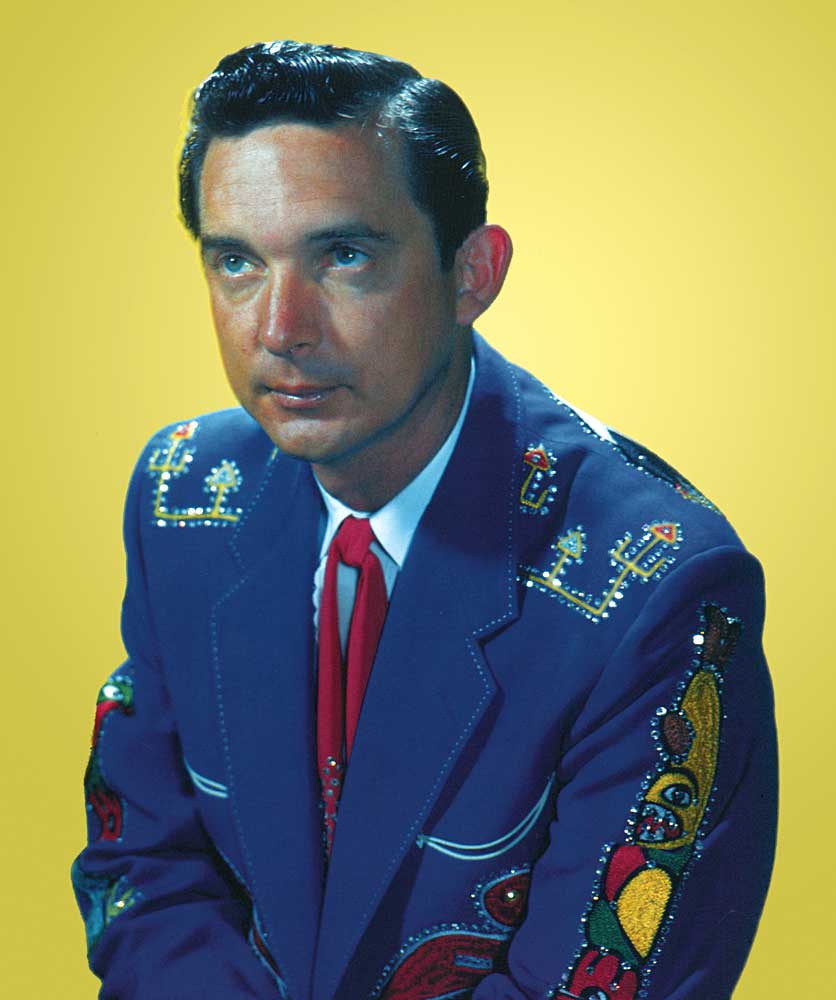
Ray Price, The Cherokee Cowboy

Ray Price, The Cherokee Cowboy

I love Ray Price’s voice even more than I love his Cherokee-themed Nudie suits, so it was a thrill to be sitting opposite the bench where he’d slept when out on tour, drinking my very first bottle of Lone Star and listening to Dale Watson talk. Incidentally, here’s a link to a great live version of the love song to Lone Star beer that Dale had just recorded back in 2010.
Hey Brown Bottle: Dale Watson & His Lone Stars
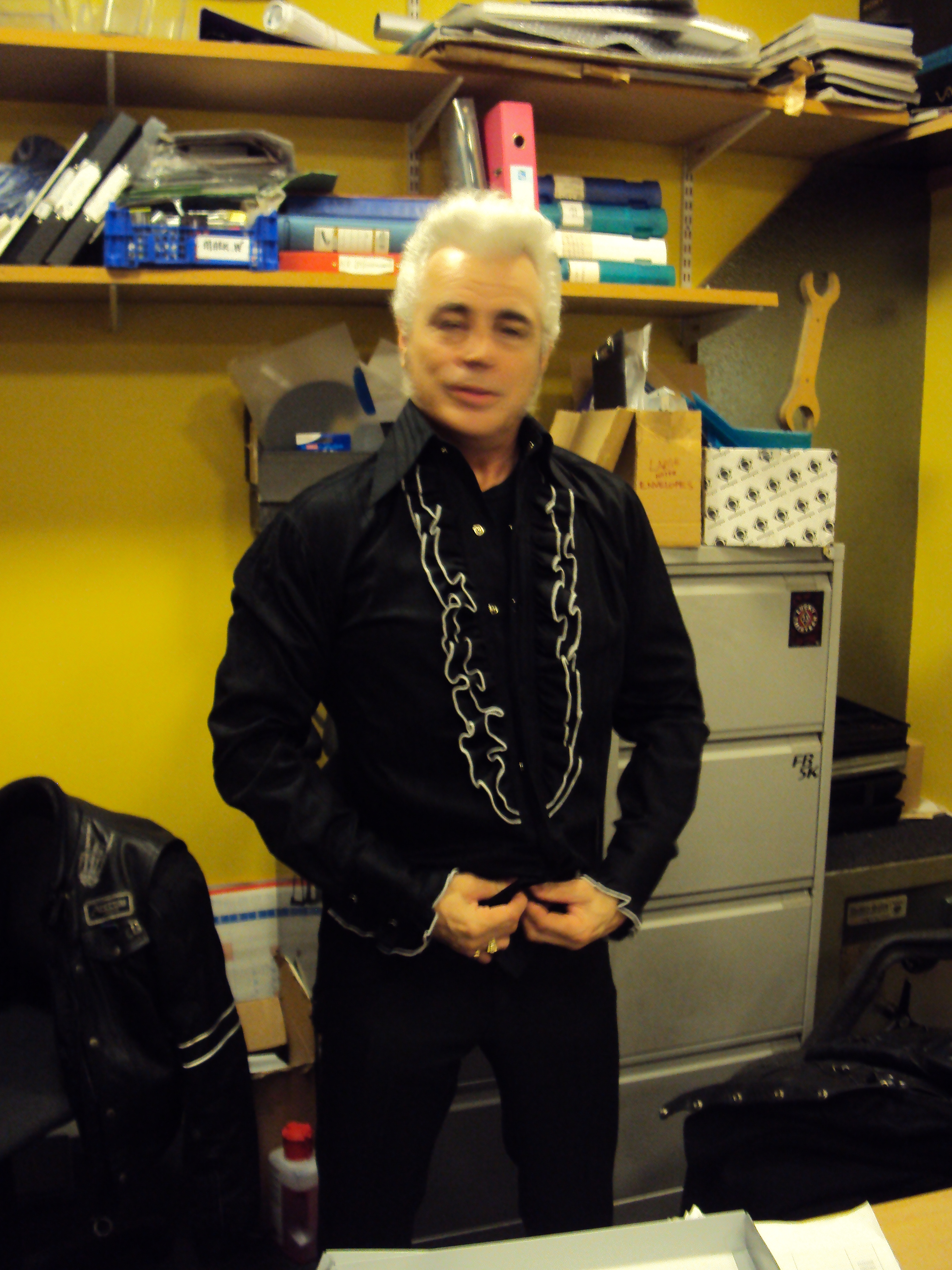
During the interview, Dale told me that for some time he’d been looking for a vintage ruffled shirt with white edges to the ruffles. I made up my mind there and then to make him one and hand it over next time he came to the UK. I wanted to say thanks for his help – making a good job of that MA project meant the world to me and I’ll always be grateful to the musicians who gave up their time – Dale, Marty Stuart and Jim Lauderdale.

And besides – I’m such a fangirl when it comes to Dale! I knew what a thrill it would be to see him in one of my shirts.

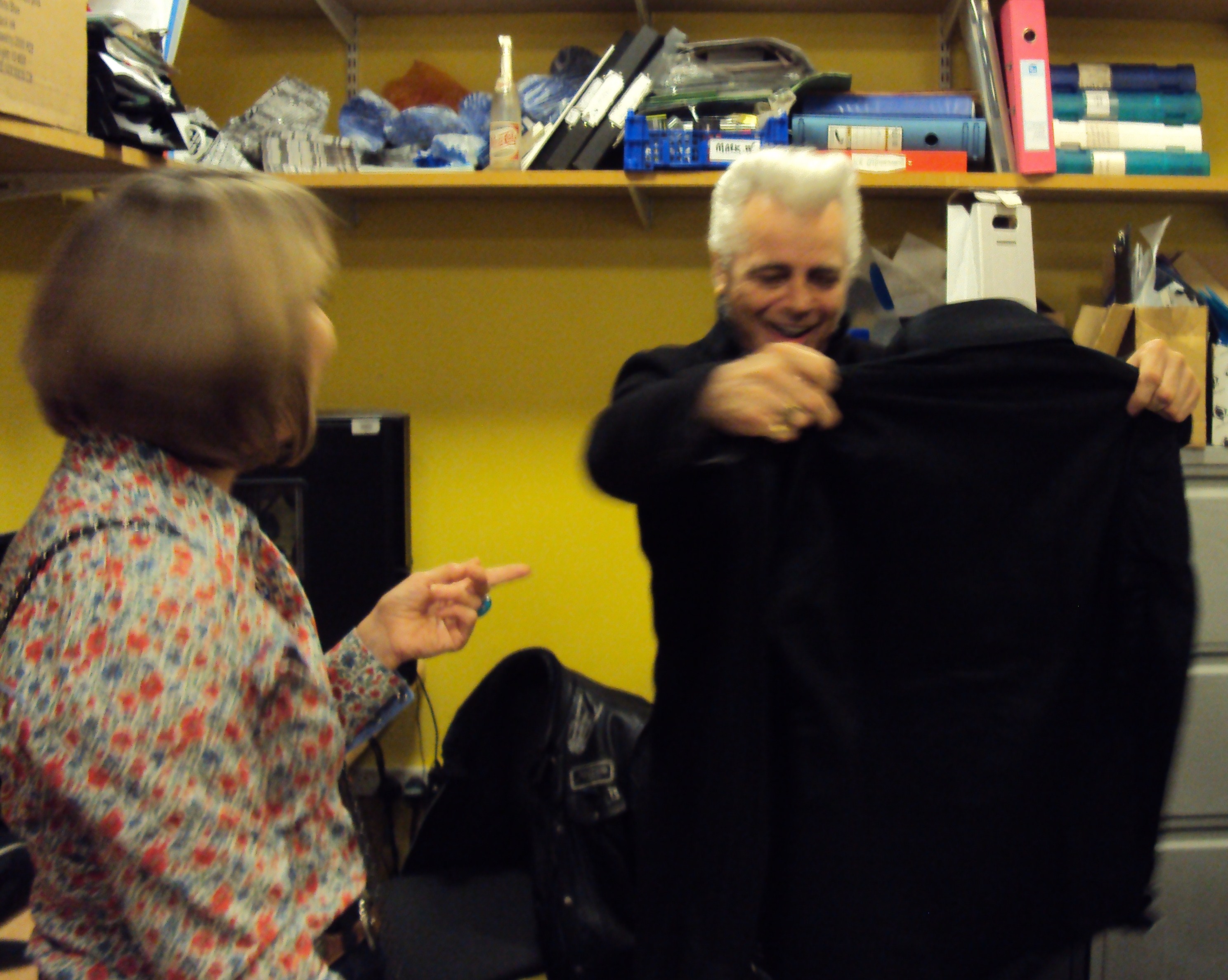
The shirt’s not in the usual Dandy & Rose style and presented a bit of what they call in ‘The Great British Bake Off’ a ‘technical challenge’, but I had fun making it and when he made this face as he took it out of the box…

Is that what you wanted?

Is that what you wanted?

…I knew it had been worthwhile!

It was a perfect fit. And he looked very handsome in it!swagger

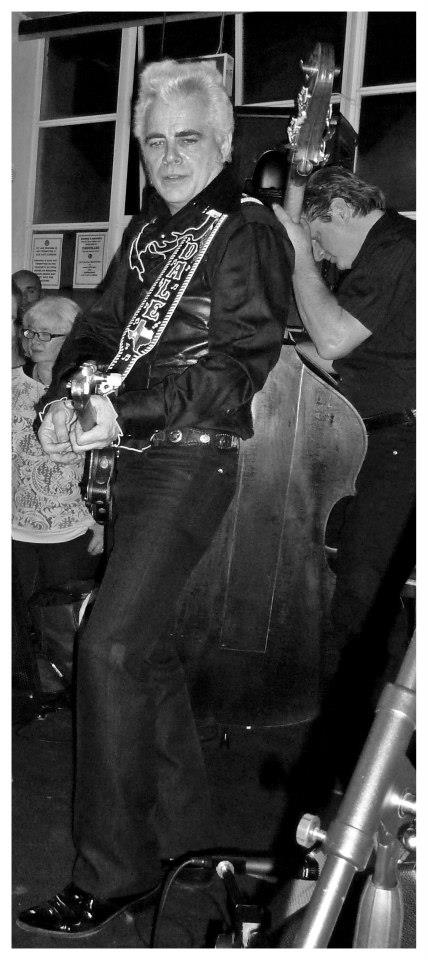
And of course, it was very special to see him wear it during in his great set at the Ace Cafe, London later that evening. Thanks, Dale!

patent boots

Patent boots and a ruffled shirt! Now that’s what I call a dandy!


Leave a comment

Ruffles and Rhinestones

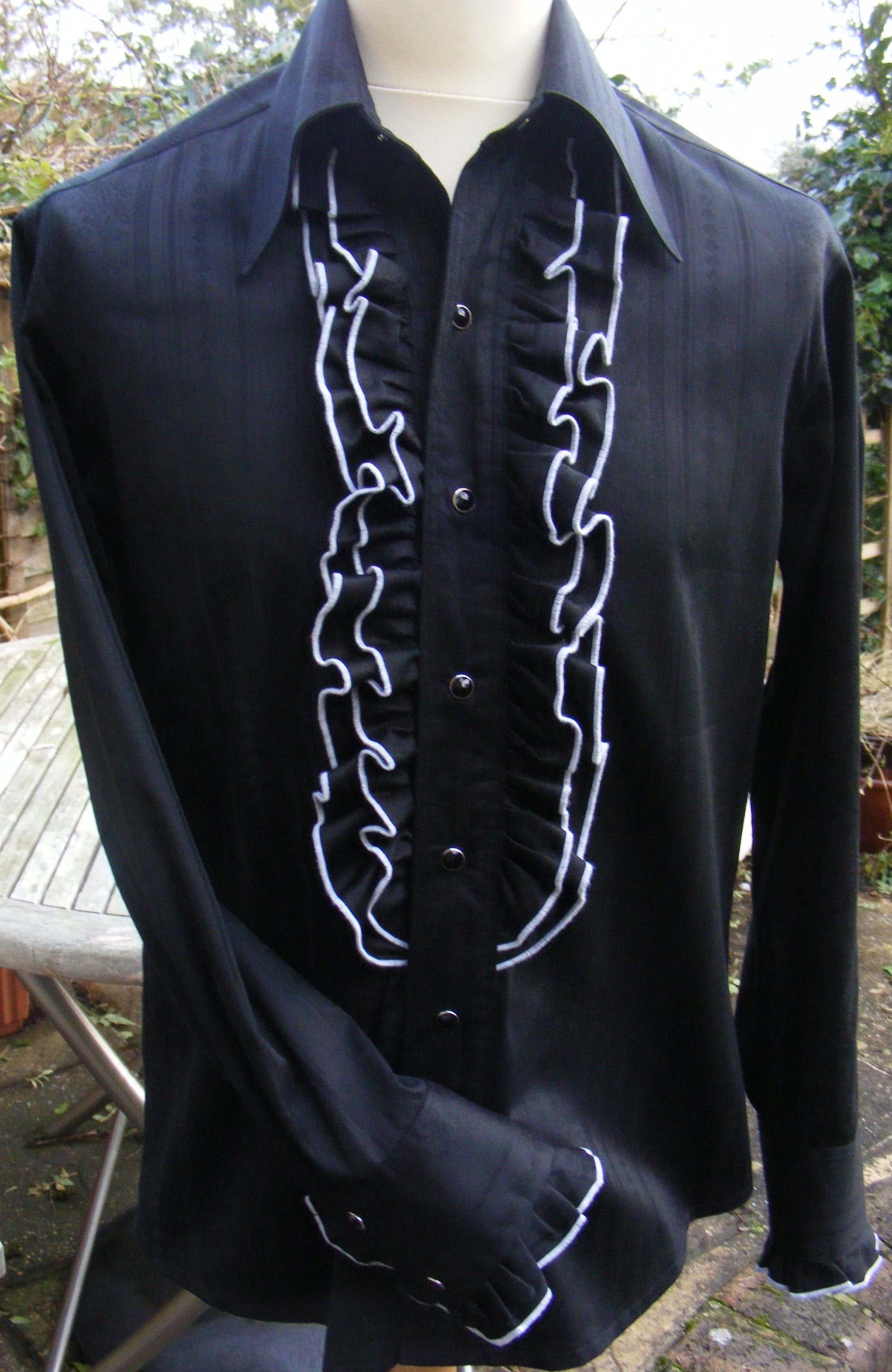
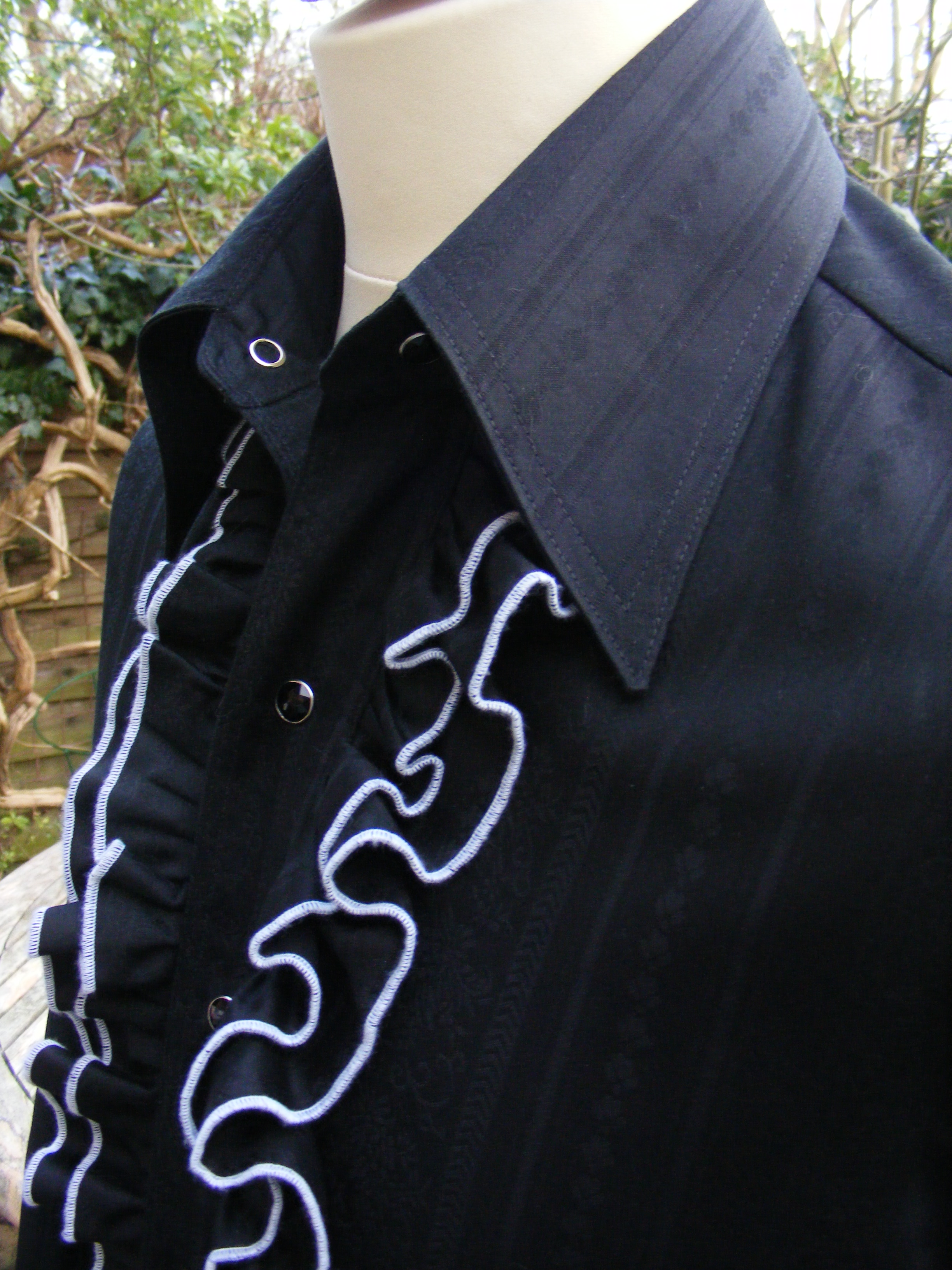
After a couple of ruffle-obsessed weekends, I have finally produced a ruffled shirt. Here is is:

outside front


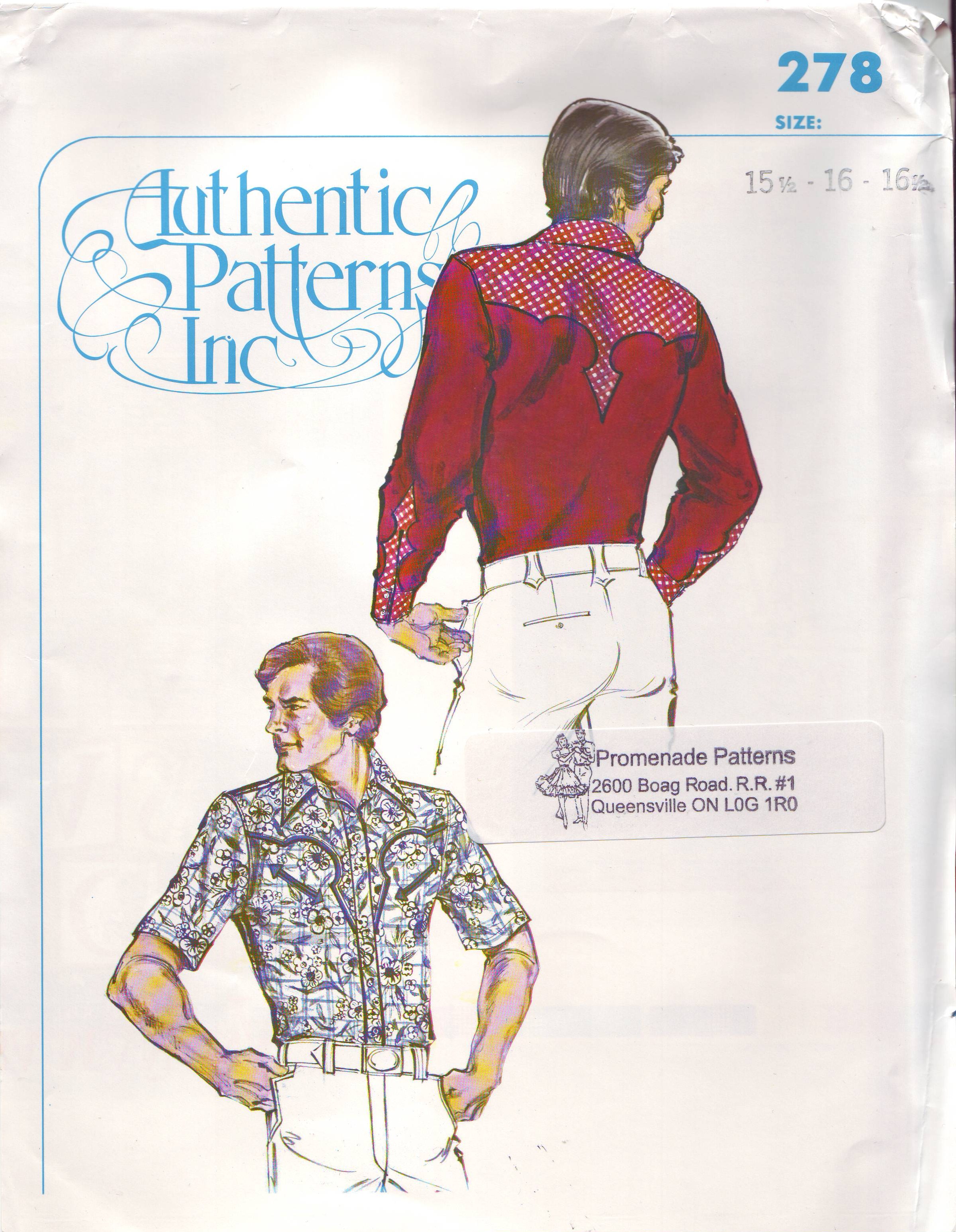
I won’t pretend that there was no struggle involved. I used this favourite pattern from the 1970s, so as to get a proper fitted 70s shape and collar:

authentic 278


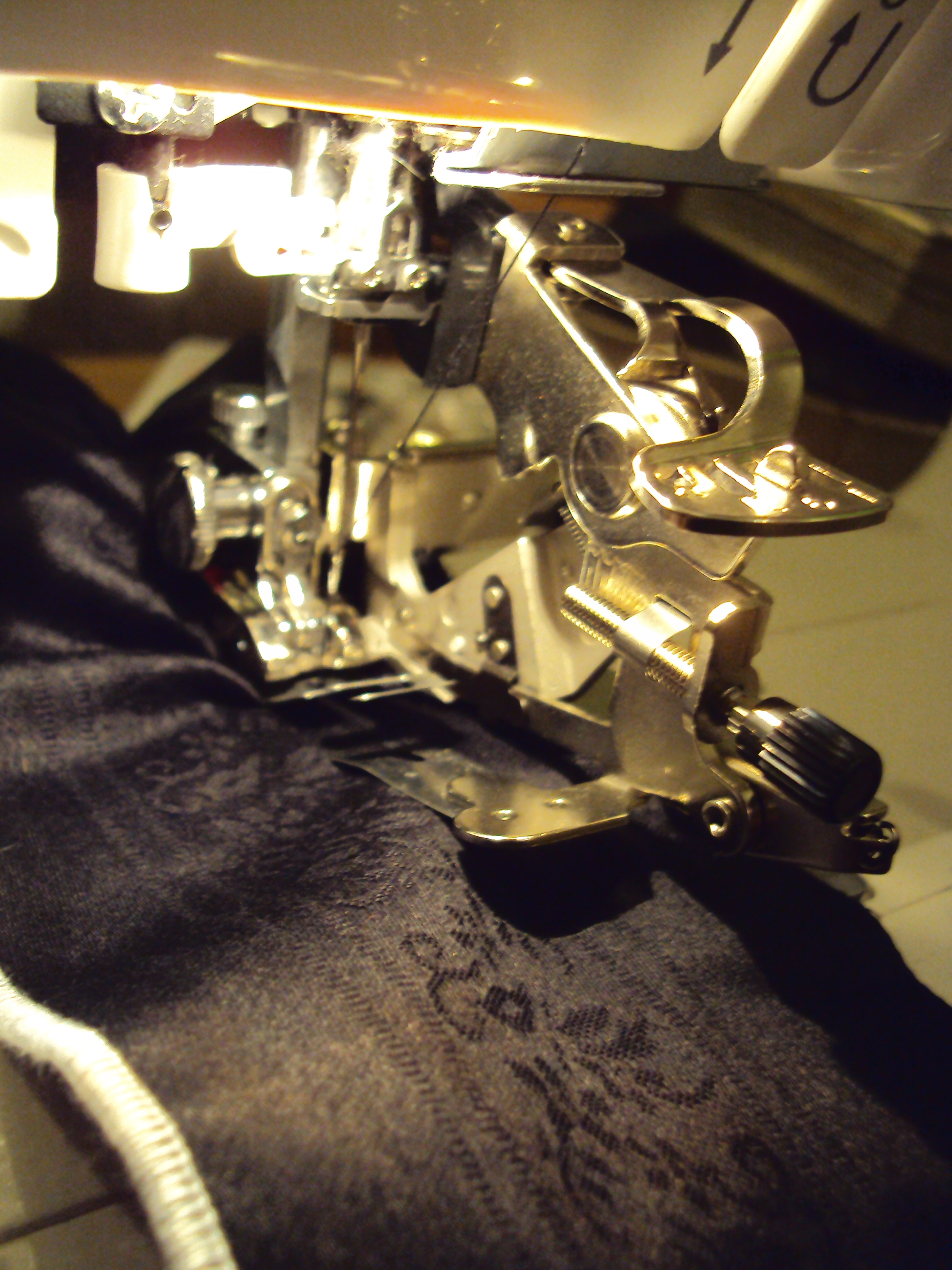
At first I was cock-a-hoop to think I was only dealing with ruffles and not fiddly-diddly piping and impossible smile pockets and embroidered arrowheads. But pretty soon I realised that opting for a laid-on front band had made life very difficult – it was so hard to get the ruffles flat enough to tuck under the edge of the band neatly. 20 miles of thread later I decided it was time to invest in a ruffler attachment for the sewing machine and I bought this Janome ‘Ultimate Ruffler’:

ruffler


It’s quite a contraption isn’t it? It didn’t help that, after quite detailed instructions about how to make sure the needle didn’t hit the foot, it was as if they’d given up. No word at all about how to make ruffles. But I found an instruction video online and once I got stuck in, it was easy. The attachment fits over the needle screw though and it wasn’t until the needle had dropped out twice that I realised that after a bout of heavy ruffling, the screw gets loose and needs a twist.

I know now, though.

I was determined to use rhinestone snaps – on the grounds that less is never more – but they wouldn’t behave and kept wobbling in the press so I wasted loads. Got them on in the end, though.                                                                                                               


ruffles and rhinestones

It was such fun to make and I’ve got lots more ruffly ideas in my head.

Now… does anyone know a matador who needs a shirt? I can do white as well, you know…


Leave a comment

Ruffles On My Mind

This weekend, there was snow on the ground and ruffles on my mind.

I love to see a man in ruffles, don’t you?

Whether they are crisp ruffles like the ones on the great Texan honky-tonker Dale Watson’s Seventies prom shirts:

carryinonjpg

Dale buys his shirts from the vintage website, RustyZipper.com. Now who else could have told you that?

And then I like foppish, floppy ruffles like the ones Gram Parsons favoured:

gram ruffles

Wait – is that even a man’s shirt? A suit order in the Nudie’s The Rodeo Tailor, now at the Autry National Center in LA, notes that Gram had a ‘small chest’ – so maybe not.

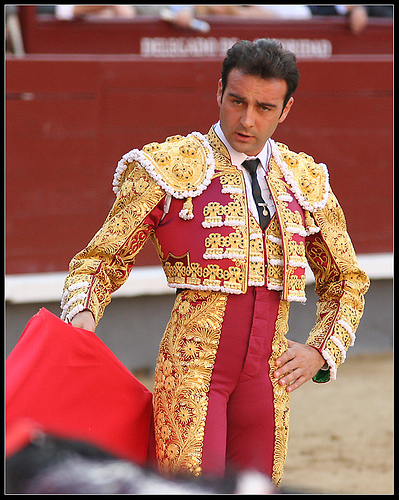
But my favourite ruffles are the ones on matadors’ shirts. Nursery-starched, white on white, pristine amongst all the sand, blood and spangles, they are my favourite element of matador attire, which is one of my favourite things of all. Here is Enrique Ponce, on whom I admit I developed a little crush when I was researching matadors’ suits of lights for a paper for the Design History Society’s conference last year:

enrique

So for a while, I have been planning to make a ruffled shirt for the Dandy & Rose collection, in honour of all these influences. And being snowed in was the perfect excuse. I decided on black, with white edging to the ruffles. I used the narrow hem stitch on my trusty Elna overlocker to make a neat, decorative edge and gathered up the ruffles with two rows of long stitches, like my mum taught me.

It’s quite good, but not good enough. Like all new projects, it turned out to have unexpected challenges, and I have learned a lot. So this week I’m going to be unpicking and re-doing those ruffles. And I’ve bought a gadget.

Now, I would like to be one of those hard-core seamstresses that resist gadgets and boast of using their granny’s sewing machine (some of whom regularly pop round to use my automatic buttonhole attachment) but I’m not. I love gadgets. You name it, I’ve got it. Magnetic needlecases with magnets so strong you have to wrestle the needles away from them; the magnificently-named ‘jean-a-ma-jig’, designed for helping the machine foot over lumpy bits. I specially love that one, even though a folded piece of card used to do the job. But not as well, I promise.

So now I have invested (and at £40 it was an investment, believe me) in Janome’s Ultimate Ruffler foot. Not just any old ruffler. Ultimate Ruffler. How could I resist? I hope it will be here for the weekend! Seamsters and seamstresses – stand by for a review! And pictures of the finished shirt!


Leave a comment

A Dandy & Rose by any other name…

I’m making a great paisley shirt for a lady in Germany at the moment but because the customer is buying it for her husband’s Christmas present, I can’t tell you about it. Ssssshhh.

So instead I thought I’d tell you where I got the ‘Dandy and Rose’ name. Back in early 2011, I was trying to think of a name that said ‘English western shirt’; I wanted to tie the idea of western styling with the Englishness of the Liberty prints I was using and, let’s be honest, the Englishness of me. Because I am very English.

It wasn’t easy. Then one day I was out and about in Lewes, where I live, and was browsing in a shop called Wickle. It’s quite quirky, and very Lewes. That’s all I’m saying.

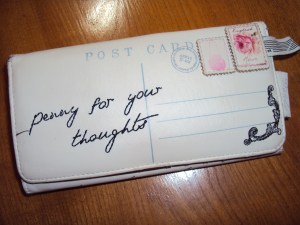
Anyway, I saw this purse and fell in love with it. DSC00942

I thought it was so pretty, with all the embroidery and appliqué, and practical too. The first thing that caught my eye was the stamp with the words ‘English rose’ in the corner.

And then I noticed the word, ‘Dandy’ on an embroidered label on the side. Now, this was at the time when I was starting work on my MA dissertation, which was called ‘Hillbilly Deluxe: Male Dress and the Performance of Country Music.’ It was about the spangly suits that country singers wear, sometimes called ‘Nudie suits’, but also designed and made by Nathan Turk, Rodeo Ben, and these days by Manuel in Nashville and Jaime in North Hollywood. And just a couple of weeks earlier, I’d written a review of a show by the great Texan honky tonk singer, Dale Watson, where I’d commented, ‘what a dandy he is!’ And he is too. So dandies, men who lavish time and attention on their appearance, were something that preoccupied me. Especially dandy cowboys. I spent a lot of time tracking down the history of this song:

http://http://www.youtube.com/watch?v=O6aNiMQStLw

with its poignant verse                 

‘He kissed me and hugged me and I called him my dandy

 The Trinity’s muddy and The Brazos quicksandy

 I kissed him and hugged him and called him my own

 Then down by the river, he left me alone.’

That’s the girl’s version by the way.

Suddenly I had my name – Dandy & Rose. It was one of those times that you rack your brains for ideas, then suddenly, chance brings the answer.

The labels are the work of my very talented MA classmate, Cecilia Ziko. I asked her to include a hummingbird because I love them, and because my favourite dandy quote was one that Jane Carlyle wrote in her diary in 1845:

‘Today, oddly enough, while I was engaged in re-reading Carlyle’s Philosophy of Clothes Countd’Orsay walked in! I had not seen him for four or five years.Last time he was as gay in his colours as a Humming Bird—blue satin cravat, blue velvet waistcoat, cream-coloured coat lined with velvet of the same hue, trousers also of a light colour—I forget what—white french gloves—two glorious breast-pins attached by a chain—and length enough of gold watchguard to have hanged himself in. Today, in compliment to his five more years, he was all in black and brown—a black satin cravat, a brown velvet waistcoat, a brown coat some shades darker than the waistcoat lined with velvet of its own shade and almost black trowsers—one breast-pin—a large pear-shaped pearl set into a little cup of diamonds—and only one fold of gold chain round his neck tucked together right on the centre of his spacious breast with one magnificent turquoise. Well! that man understands his trade!—if it be but that of Dandy; nobody can deny that he is a perfect Master of it, that he dresses himself with consummate skill! velvet of the same hue, trousers also of a light colour—I forget what—white french gloves—two glorious breast-pins attached by a chain—and length enough of gold watchguard to have hanged himself in.’

You can just hear Jane’s joy in the sight and contemplation of the Count, can’t you? Me too! I love a dandy!


Leave a comment

Banjos and quarterhorses

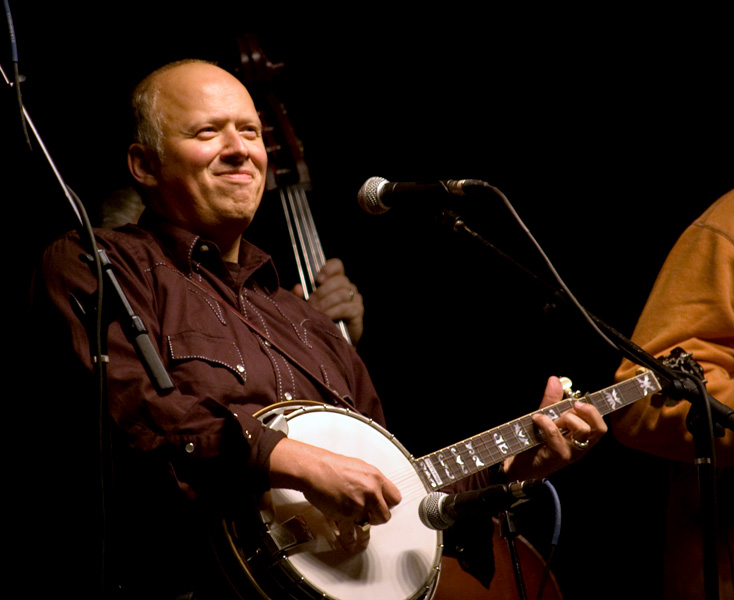
Earlier today, a friend drew my attention to the shirt that the banjo whizz Jim Mills is wearing in this photo. She asked me if the pocket treatment has a special name.
It does! I got out one of my favourite books, ‘Western Shirts: A classic American Fashion’, written by Steven G Weil, grandson of Jack A. Weil, who founded the famous Rockmount western shirt brand. I love to browse this book, which I bought in the fantastic treasure trove that is the museum shop at The Aurty Center, Los Angeles, when I went there last year to research the archive of Nudie’s the Rodeo Tailor.
Rockmount claim all sorts of innovations on behalf of Jack A. – yokes, snaps, pocket flaps -they say he more or less invented the western shirt. He died aged 107 in 2008 and set up Rockmount Ranch Wear in 1946. He was certainly an early populariser and mass producer of the western style, but I’m not so sure on the invention thing… I’ll let you know if I ever track that down!
Anyway, Rockmount attribute this style of pocket flap, and the matching yoke, to Jack A, and the call it the ‘Quarterhorse’. The book shows a number of examples from the 1940s onwards – and they are still shirts with quarterhorse yokes and pocket flaps today.
I think Jim’s shirt is very stylish!
Photo by Tom Dunning http://www.bluegrasstoday.com


Leave a comment

Lucy Daisy

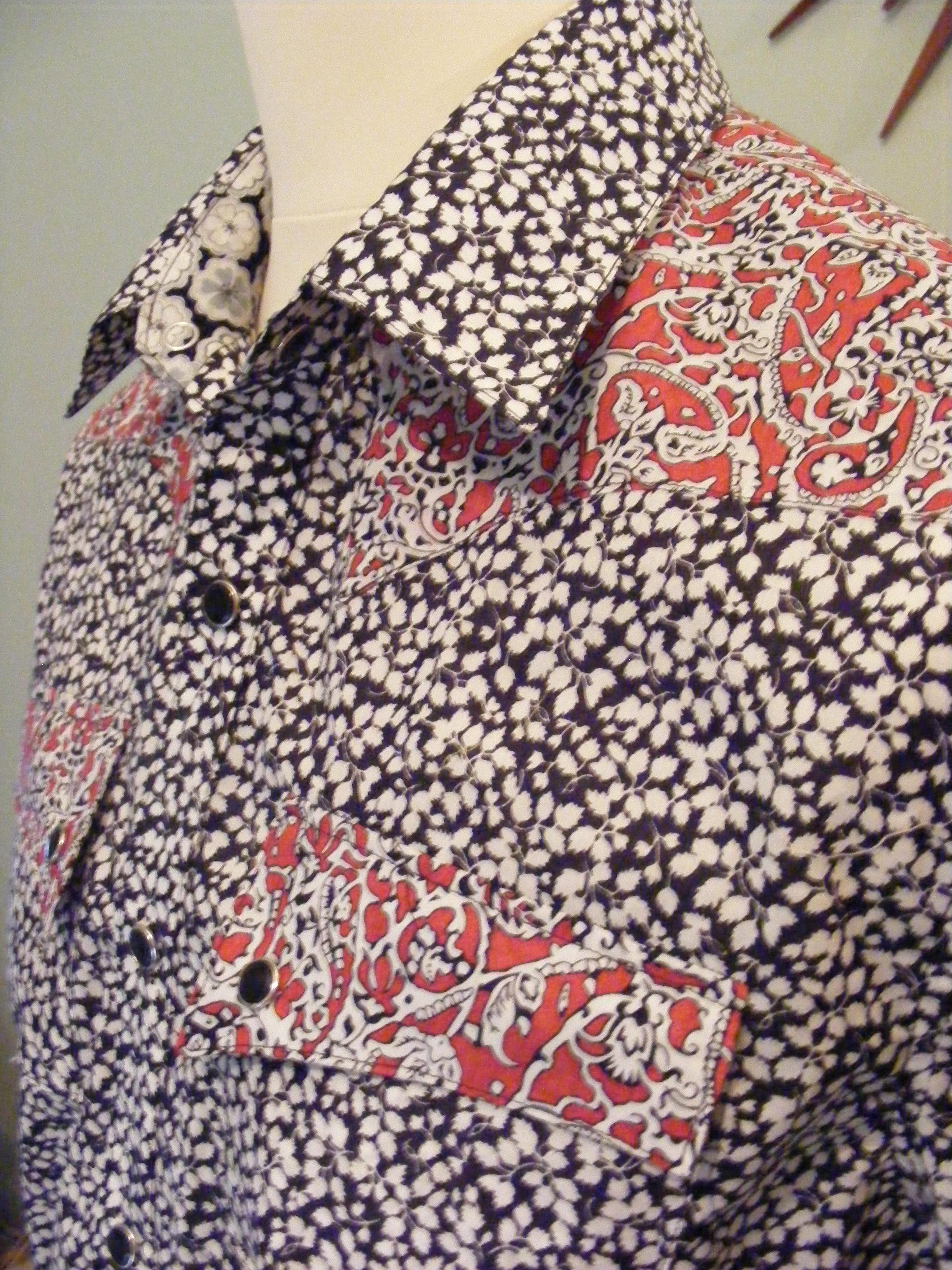
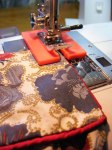
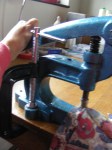
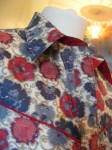
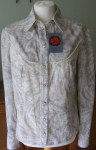
As you can see from these pictures, there are a lot of stages when it comes to making a shirt – but my favourite is when I see the finished item on a proud owner! Here is Amy Beth’s shirt, which arrived in Nashville, Tennessee yesterday after only 8 days in transit. She chose the fabric, Liberty’s tana lawn in their print ‘Lucy Daisy’, from the Liberty website. I paired it with cherry red lawn for the accents and blue-grey pearl snaps. I think she looks great!


2 Comments

Kerry’s Flock

This slideshow requires JavaScript.


One of the great things about making shirts to commission is that sometimes customers spot a fabric I’ve overlooked. This subtle, beautifully drawn, feathery beauty was spotted on the Liberty website by a customer in Australia. It’s called ‘Kerry’s Flock’. No idea why! She wanted a rounded yoke shape and a fitted style. We added lots of piping to give definition and brought out the yellow – it’s her favourite colour – with palest yellow pearl snaps. It’s winging its way to the other side of the world right now!